

When temperatures drop, losing heat isn’t just inconvenient it’s an emergency.That’s where emergency furnace repair winter services become essential.Whether your furnace suddenly stops working, starts leaking, or blows cold air, knowing what to do can prevent costly damage and keep your family warm and safe.
Winter weather pushes furnace systems to work harder than any other time of year. Overworked units are more prone to breakdowns, making fast repair services crucial. Skilled HVAC technicians diagnose issues quickly, restore heat, and ensure your system runs efficiently for the rest of the season.
Our expert technicians are available day and night, delivering fast repairs, diagnostics, and maintenance throughout the Greater Phoenix region. Whether you’re in Phoenix, Scottsdale, Mesa, (Gilbert Professional HVAC Services), Chandler, Tempe, Queen Creek, Apache Junction, or San Tan Valley, we’re always close by and ready to restore your cooling system the moment you need us.
Why Emergency Furnace Repairs Matter in Winter
- Prevent frozen pipes and home damage
- Maintain safe indoor temperatures
- Reduce health risks from poor air quality
- Avoid high utility bills caused by malfunctioning systems
A malfunctioning furnace can also lead to carbon monoxide leaks, which makes timely repairs a safety priority.
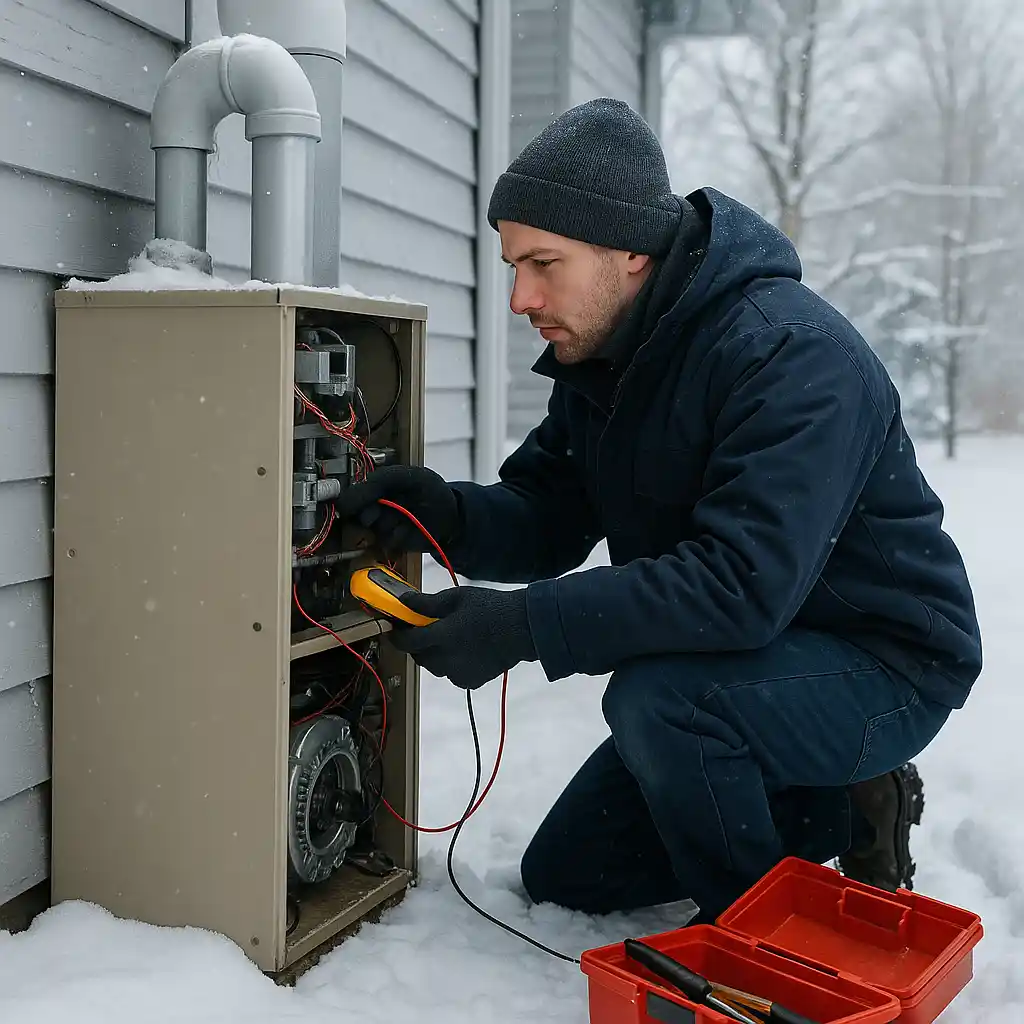
Furnace Leaking Water in Winter ,Causes and Fixes
One of the most common seasonal furnace issues is furnace leaking water in winter.This can happen for several reasons:
Common Causes
- Clogged condensate line – prevents water from draining
- Damaged heat exchanger – allows excess condensation
- Faulty humidifier – leaks into the furnace base
What to Do
- Turn off the furnace immediately
- Check for standing water and clean it
- Call emergency furnace services to inspect the condensate pump and drainage
Ignoring a water leak can lead to rust, mold, and expensive furnace replacements.
Running Furnace Fan Continuously in Winter Is It Right or Wrong?

Some homeowners notice their system running the furnace fan continuously in winter and worry something is wrong. This can be normal or a sign of a failing component.
Reasons It May Run Nonstop
- Your thermostat fan setting is on ON instead of AUTO
- Faulty limit switch stuck in fan mode
- System overheating and triggering safety responses
Best Practice
Use AUTO mode unless advised otherwise by a technician. If the fan still runs nonstop, schedule an inspection, as the fan could be masking a heating issue.
FAQ About Emergency Furnace Repair Winter Services
1.What qualifies as an emergency furnace repair in winter?
An issue becomes an emergency when your furnace stops producing heat, leaks water, emits burning smells, or triggers carbon monoxide alarms. Any situation that threatens your safety or leaves your home without heat during freezing temperatures requires emergency furnace repair winter services.
2. How fast can an HVAC company respond to emergency furnace issues?
Most reputable HVAC companies provide same-day or 24/7 emergency services. In severe cold weather, technicians prioritize homes with no heat, furnace leaks, or electrical hazards to restore comfort as quickly as possible.
3.Why is my furnace leaking water in winter?
A furnace leaking water in winter usually indicates a clogged condensate drain, cracked heat exchanger, or malfunctioning humidifier. Addressing leaks immediately prevents rust, mold growth, and expensive system damage.
4. Can I fix a furnace leak myself?
Minor issues like clearing a drain line might be DIY-friendly, but internal leaks, pump failure, or exchanger cracks require a certified technician. Attempting repairs without training can void warranties or create safety risks.
5. Is running a furnace fan continuously in winter normal?
It can be normal if your thermostat fan setting is on ON or if your HVAC technician recommends continuous air circulation. However, if the furnace fan runs nonstop without heating, it may indicate a limit switch failure or overheating issue.
6. Does running a furnace fan continuously in winter save energy?
In well-insulated homes, continuous fan operation can improve temperature balance. However, in older systems, it may increase electricity usage. Always check with a professional before making it a permanent setting.
7. How do I know if my furnace is about to fail?
Watch for:
- Irregular heating cycles
- Loud banging or rattling noises
- Rising utility bills
- Dust buildup or poor air quality
- Water leaks or fan running non-stop
These symptoms often appear before a major breakdown.
8. Can delaying winter furnace repairs increase costs?
Yes. Small issues like a leak or fan malfunction lead to worn-out parts, reduced efficiency, and total system failure if ignored. Emergency repair now costs far less than replacing the entire furnace later.
9. How often should I service my furnace in winter?
At least once per year. Preventive maintenance ensures system efficiency, reduces emergency calls, and extends furnace lifespan, especially during harsh winter months.
10. Is it safe to run my furnace if it smells like gas or burning?
No. Turn off the furnace immediately, open windows, and call for emergency repair services. Gas leaks and burning odors signal dangerous electrical or combustion issues.
Conclusion
Emergency furnace repair winter services are not optional they’re essential for comfort, safety, and preventing costly damage. If you notice leaks, strange noises, or nonstop fan operation, take action right away. Your home and your wallet will thank you. Need help fast? Contact our certified HVAC technicians before the cold gets worse. Phone: (480) 772-0229
Schedule an Appointment: [Book online]
Follow Us on Instagram